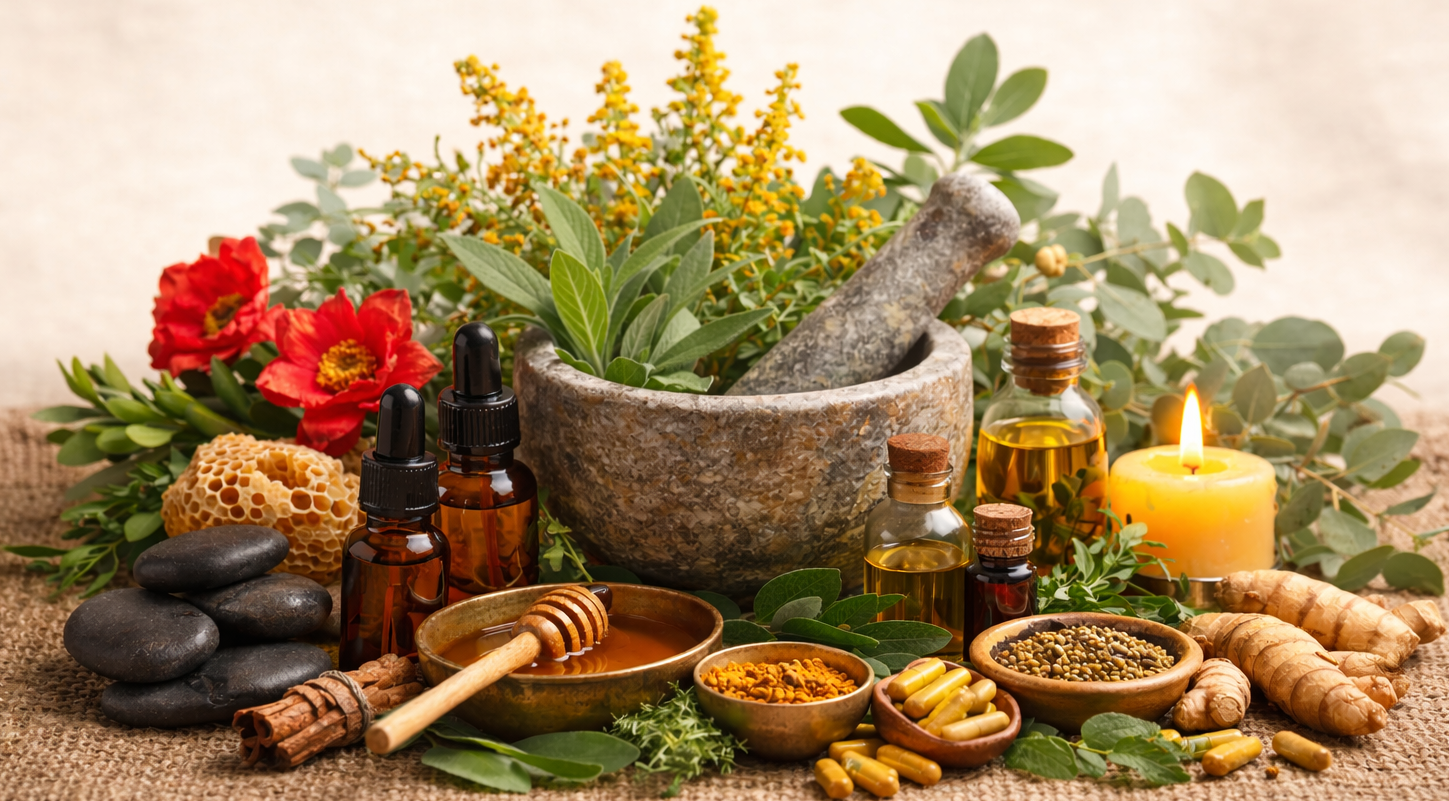
Ginger is one of the most important and widely used herbs in Ayurveda, the ancient system of holistic healing originating in India. Known as Śuṇṭhī (dried ginger) and Ārdraka (fresh ginger), ginger is valued for its ability to strengthen digestion, balance the doshas, and support overall vitality.
In Ayurvedic medicine, ginger is often referred to as a universal medicine because of its broad range of applications and its foundational role in maintaining internal balance.
Ayurvedic Properties of Ginger
Ayurveda evaluates herbs based on their energetic and functional qualities. Ginger’s properties explain why it is so effective across multiple systems of the body.
- Rasa (Taste): Pungent
- Virya (Energy): Heating
- Vipaka (Post-digestive effect): Sweet
- Dosha Action:
- Balances Vata and Kapha
- May increase Pitta when overused
These characteristics make ginger especially beneficial for individuals experiencing sluggish digestion, heaviness, or coldness in the body.
Health Benefits of Ginger in Ayurveda
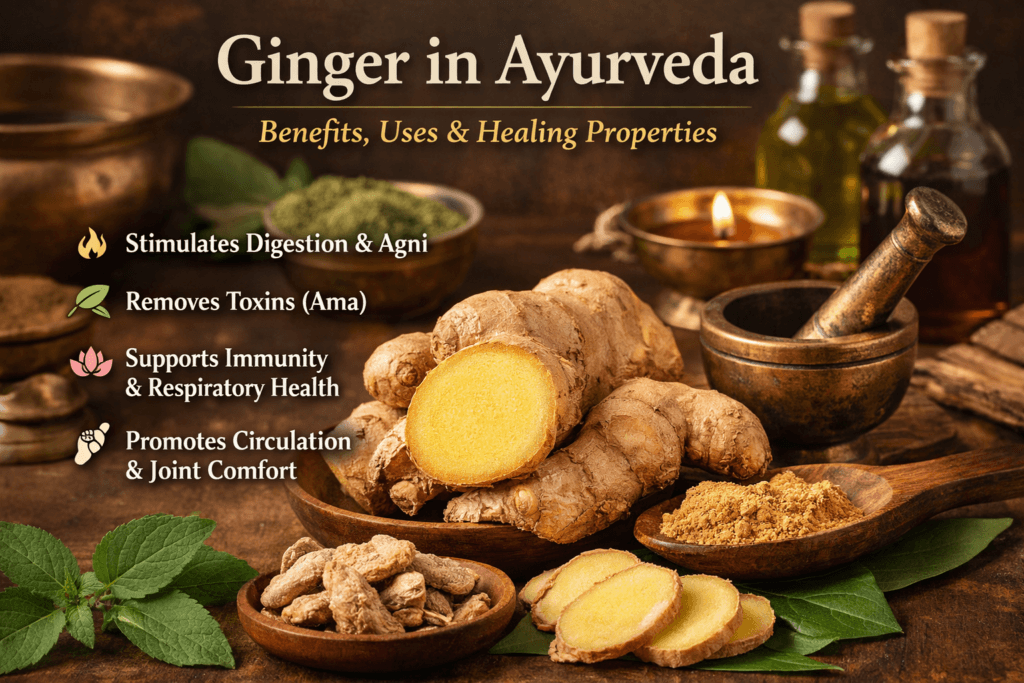
Strengthens Agni (Digestive Fire)
In Ayurveda, all health begins with Agni, the digestive fire. Ginger is one of the most effective herbs for awakening and maintaining strong Agni.
Traditional uses include:
- Supporting proper digestion and metabolism
- Reducing bloating and heaviness
- Encouraging efficient nutrient absorption
A healthy digestive fire also plays a key role in preventing imbalance throughout the body.
Helps Eliminate Ama (Toxins)
Ama refers to toxic residue that forms when digestion is weak. Ginger’s warming, penetrating nature helps break down and mobilize Ama, supporting the body’s natural detoxification processes.
By reducing Ama, ginger contributes to:
- Clearer digestion
- Improved energy levels
- Greater overall balance
Supports Immune and Respiratory Health
Ginger has long been used in Ayurveda to support immune resilience and respiratory comfort, particularly during seasonal transitions.
Its warming quality helps:
- Reduce excess Kapha and mucus
- Promote circulation
- Support the body’s natural defense mechanisms
This makes ginger a valuable herb during colder months or in damp environments.
Promotes Circulation and Joint Comfort
Ayurvedic texts frequently reference ginger for its ability to promote circulation and warmth throughout the body. It is traditionally used to support joint comfort and mobility, especially when stiffness is associated with cold or dryness—common Vata qualities.
Enhances Energy and Vitality
By strengthening digestion and circulation, ginger supports Ojas, the subtle essence responsible for immunity, endurance, and vitality in Ayurveda. When digestion is balanced, the body naturally produces more sustainable energy.
Fresh vs. Dried Ginger in Ayurveda
Ayurveda recognizes that fresh and dried ginger offer distinct benefits.
Fresh Ginger (Ārdraka)
- Lighter and more moist in nature
- Traditionally used for Kapha-related imbalances
- Often associated with respiratory and digestive support
Dried Ginger (Śuṇṭhī)
- More concentrated and deeply warming
- Commonly used for chronic digestive weakness
- Especially beneficial for calming Vata
Choosing the correct form depends on constitution (Prakriti) and current imbalance (Vikriti).
Ginger in Daily Ayurvedic Practice
Ginger is frequently incorporated into Ayurvedic routines as a supportive herb for digestion, detoxification, and balance. It is commonly included in classical formulations and daily wellness practices aimed at maintaining equilibrium between the doshas.
Because of its potency, Ayurveda emphasizes moderation and mindful use, particularly for individuals with strong Pitta tendencies.
Final Thoughts: Ginger’s Role in Ayurveda
Ginger’s enduring importance in Ayurveda highlights its role as a foundational healing herb. By supporting digestion, reducing toxins, and promoting warmth and circulation, ginger helps restore balance at the root level of health.
When used appropriately, ginger continues to be one of Ayurveda’s most trusted allies for long-term wellness and vitality.